

What Is a Drop Shadow? Why It Matters in Ecommerce Product Photography
Discover what a drop shadow is, why it’s one of the most widely used techniques in ecommerce product photography, and how subtle shadow editing helps products look more realistic, consistent and professionally presented.

By
If you’ve ever looked at an online product and thought it looked a little… off, the shadow is often the reason.

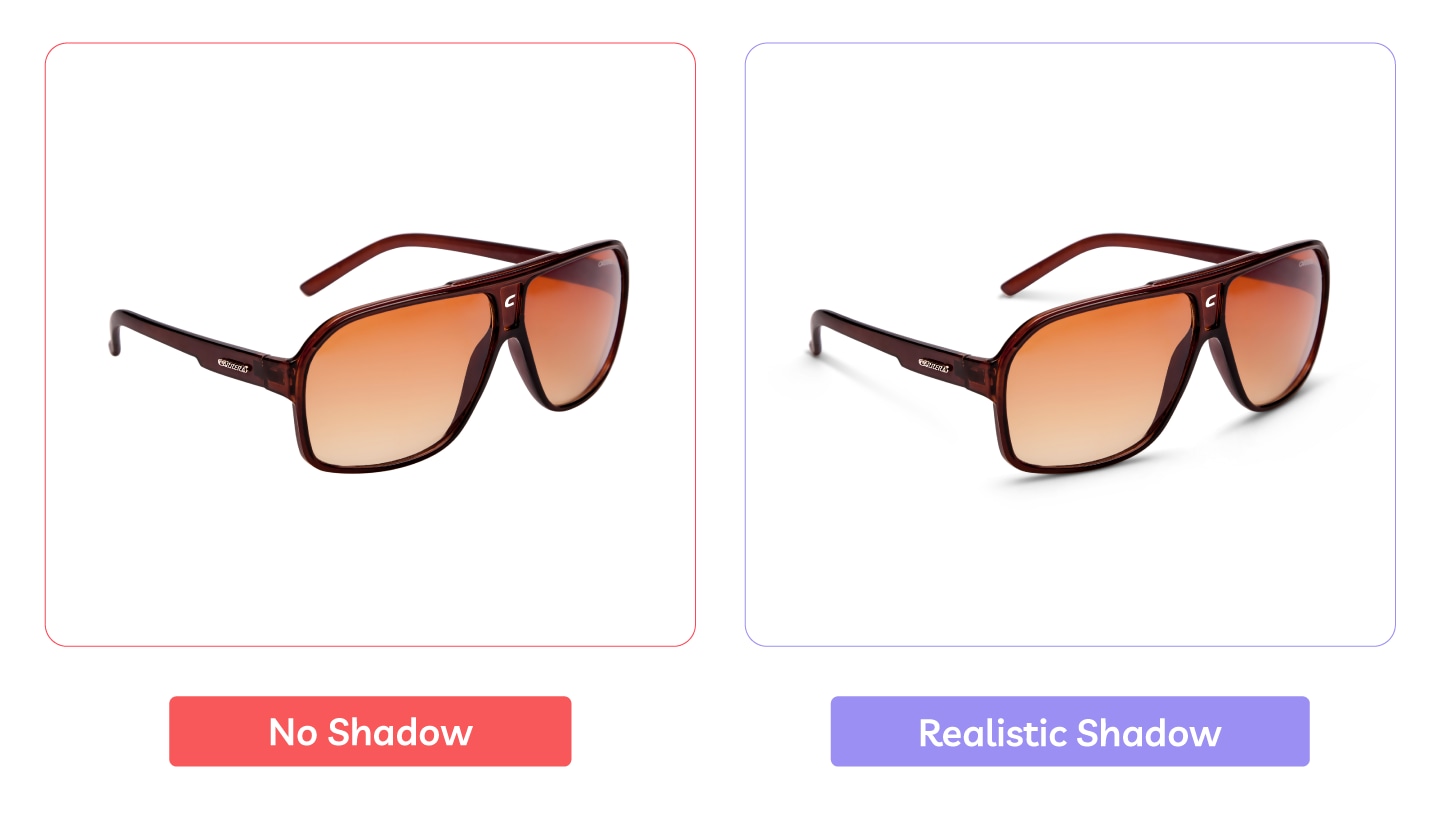
Most shoppers never consciously notice a good drop shadow. What they do notice is when there isn’t one. A product can have a perfect cutout, a crisp white background and excellent lighting, yet still feel like it’s floating awkwardly on the page.
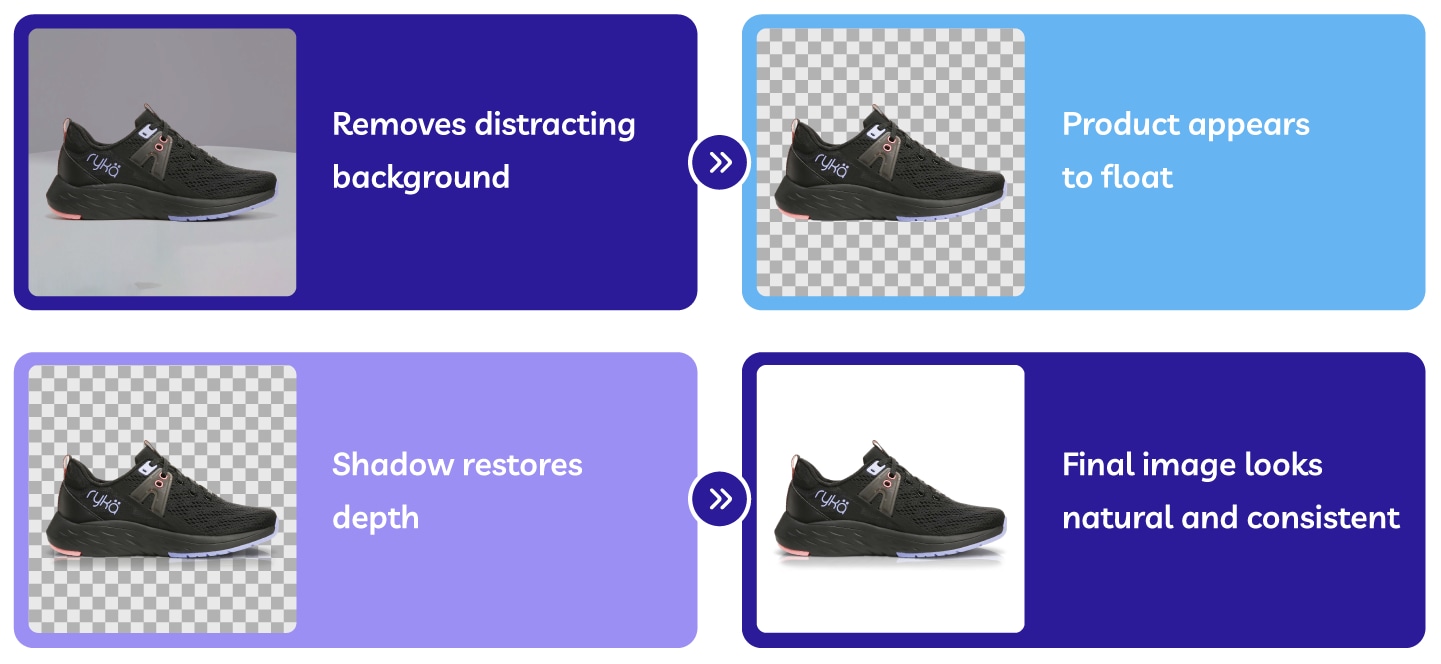
That’s because removing the background often removes the natural shadow as well. Without it, the product loses the visual cues that tell our brains where it sits in space. A realistic drop shadow restores that sense of depth, helping the product feel natural, grounded and ready for an ecommerce store.
Research from the Baymard Institute has consistently shown that product imagery plays a significant role in helping shoppers evaluate products online. Every detail contributes to that first impression, and realistic shadows are one of the subtle finishing touches that make products feel more authentic and trustworthy.
In this guide, we’ll explain what a drop shadow is, why it’s used in ecommerce photography, and show how leading brands use it to create clean, consistent product images that inspire buyer confidence
What Is a Drop Shadow?
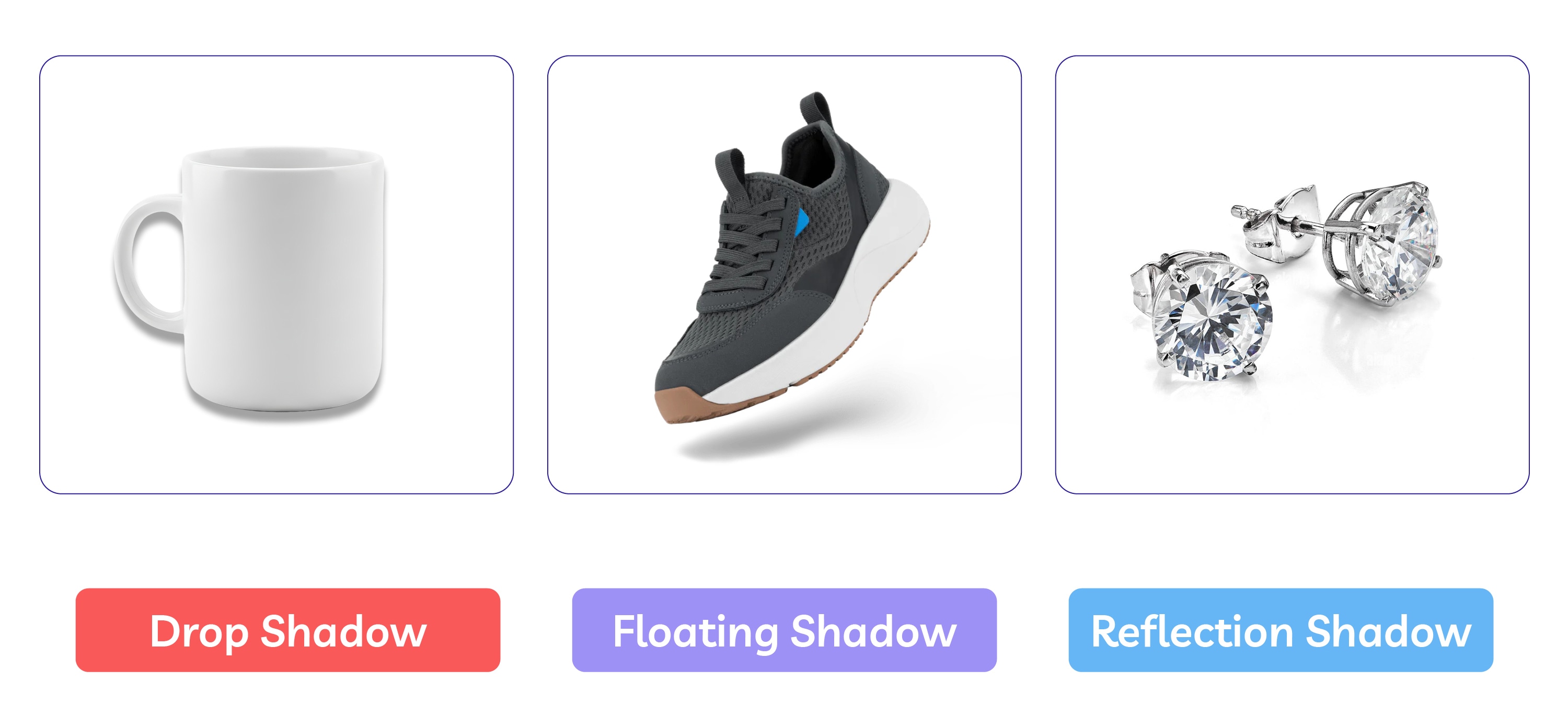
A drop shadow is a shadow added beneath or behind a product during the editing process to recreate the way light naturally falls around an object. Rather than drawing attention to itself, its purpose is to make the product feel grounded and realistic.
When a product is photographed against a white background, the original shadow is often removed along with the background itself. While this creates a clean cutout, it can also make the product appear flat or disconnected from the surface beneath it. Adding a realistic drop shadow restores that sense of depth, creating a more natural-looking image without distracting from the product.

The most effective shadows are the ones shoppers never consciously notice. They are carefully matched to the product’s shape, size and lighting, with the right amount of softness and opacity to recreate a natural studio effect. An overly dark or unrealistic shadow can be just as distracting as having no shadow at all.
For ecommerce brands, consistency is just as important as realism. Products are often photographed over weeks or months, sometimes in different studios or under different lighting conditions. Recreating shadows during post-production ensures every image shares the same professional finish, creating a catalogue that feels cohesive and making it easier for customers to compare products.
A drop shadow shouldn’t be something customers notice. It should be something they miss when it isn’t there.
A realistic drop shadow helps the product look exactly as customers expect it to, allowing them to focus on what they’re buying rather than the editing behind the image.
Why Some Product Photos Feel Fake
Have you ever looked at a product online and felt that something wasn’t quite right, even though you couldn’t explain why?
Often, the issue isn’t the product or even the quality of the photograph. It’s the way our brains interpret the image.
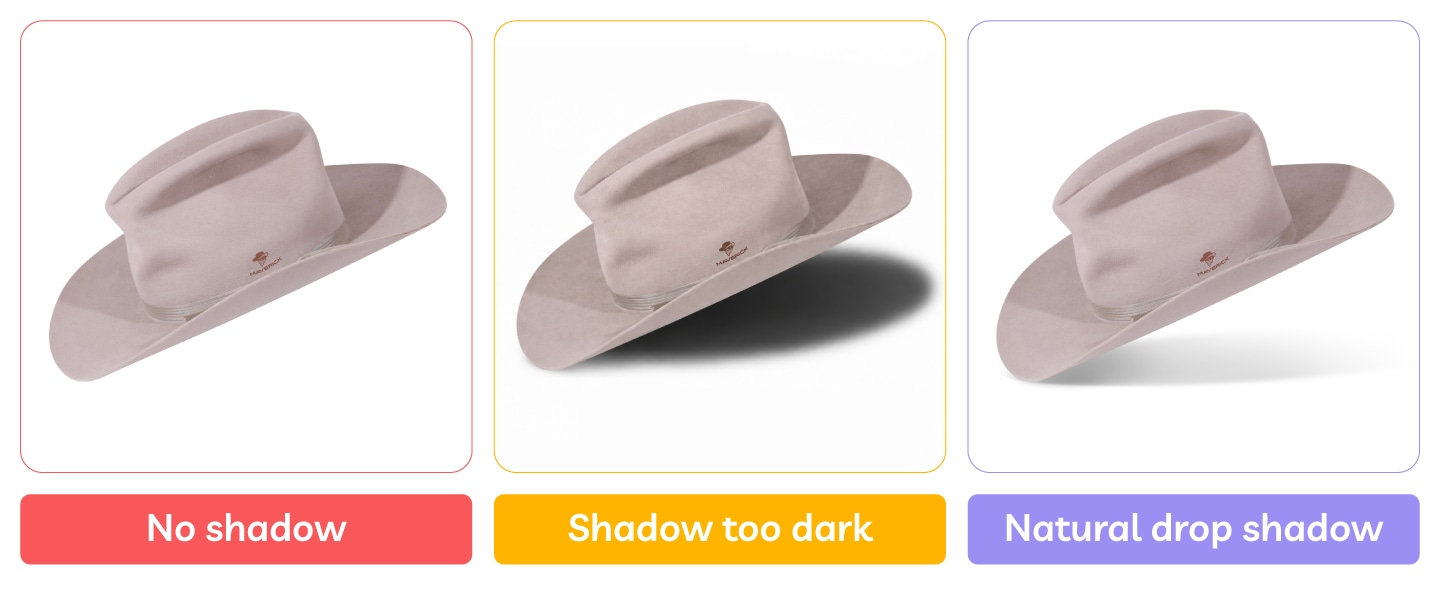
Every day, we rely on light and shadow to understand the world around us. They help us judge where objects are positioned, how high they sit above a surface and even give us clues about their size and shape. When those visual cues disappear, something feels unnatural, even if we can’t immediately identify the reason.
That’s why products can appear to “float” after the background has been removed. The cutout may be perfectly accurate, but without a shadow to anchor it, the image can feel flat and disconnected from its surroundings.
Why Ecommerce Brands Still Use Drop Shadows
If customers rarely notice a well-edited drop shadow, why do so many ecommerce brands invest time and money creating them?
The answer is simple: product photography isn’t just about showing a product. It’s about helping customers feel confident enough to buy it.
Unlike a physical shop, an online store has no opportunity for shoppers to pick up an item, judge its weight or see how it interacts with light. Every buying decision is based on what customers can see on the screen. The more natural and believable those images feel, the easier it is for shoppers to understand the product.
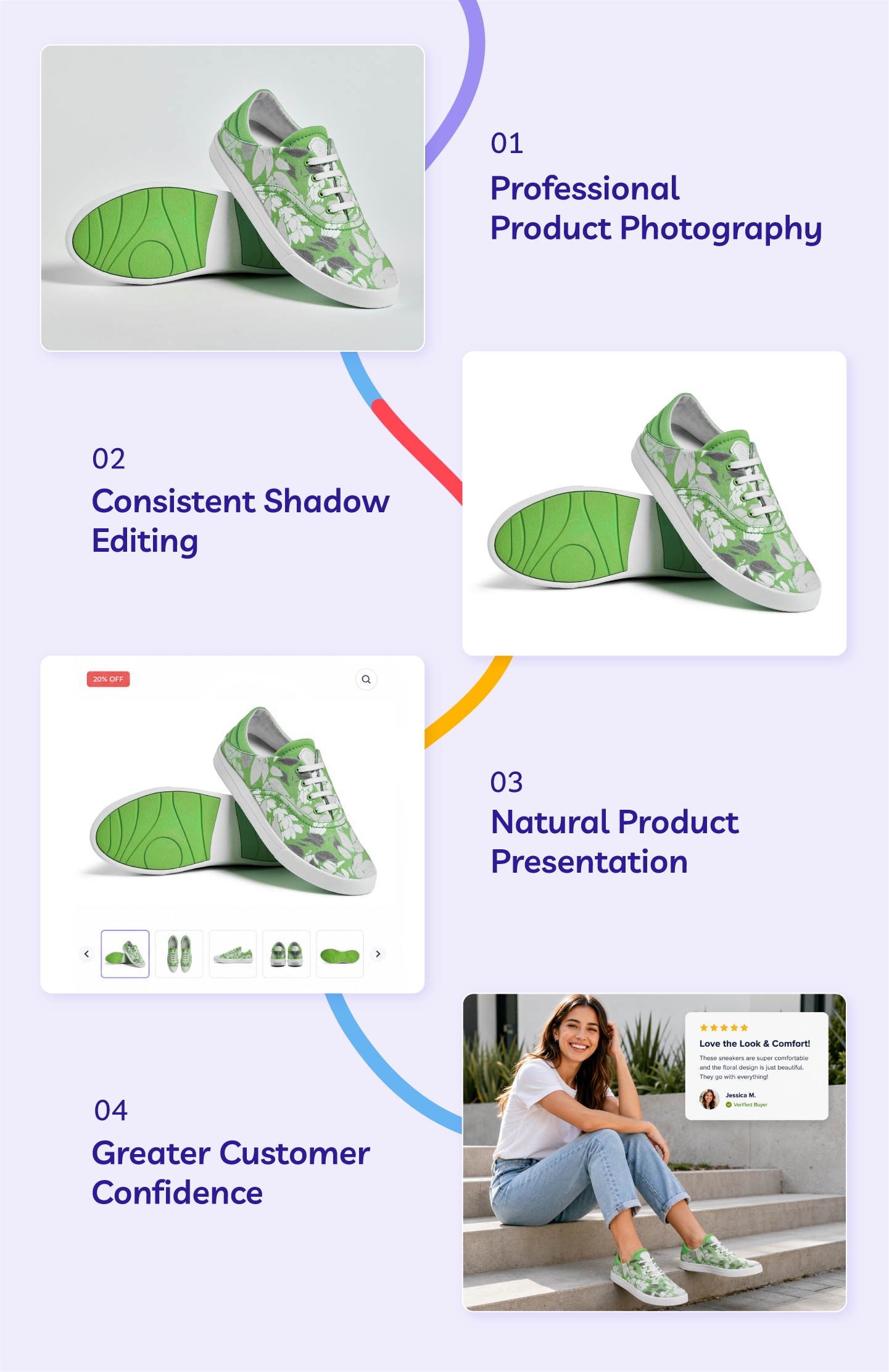
Research from the Baymard Institute has consistently shown that product imagery is one of the most influential factors in helping customers evaluate products online. Rather than relying on descriptions alone, shoppers use images to assess quality, shape, materials and overall appearance before deciding whether to purchase.
A realistic drop shadow plays a small but important role in that process. It gives products a sense of presence, helping them appear grounded instead of digitally cut out. The effect is subtle, but it makes images feel more complete and professionally finished.
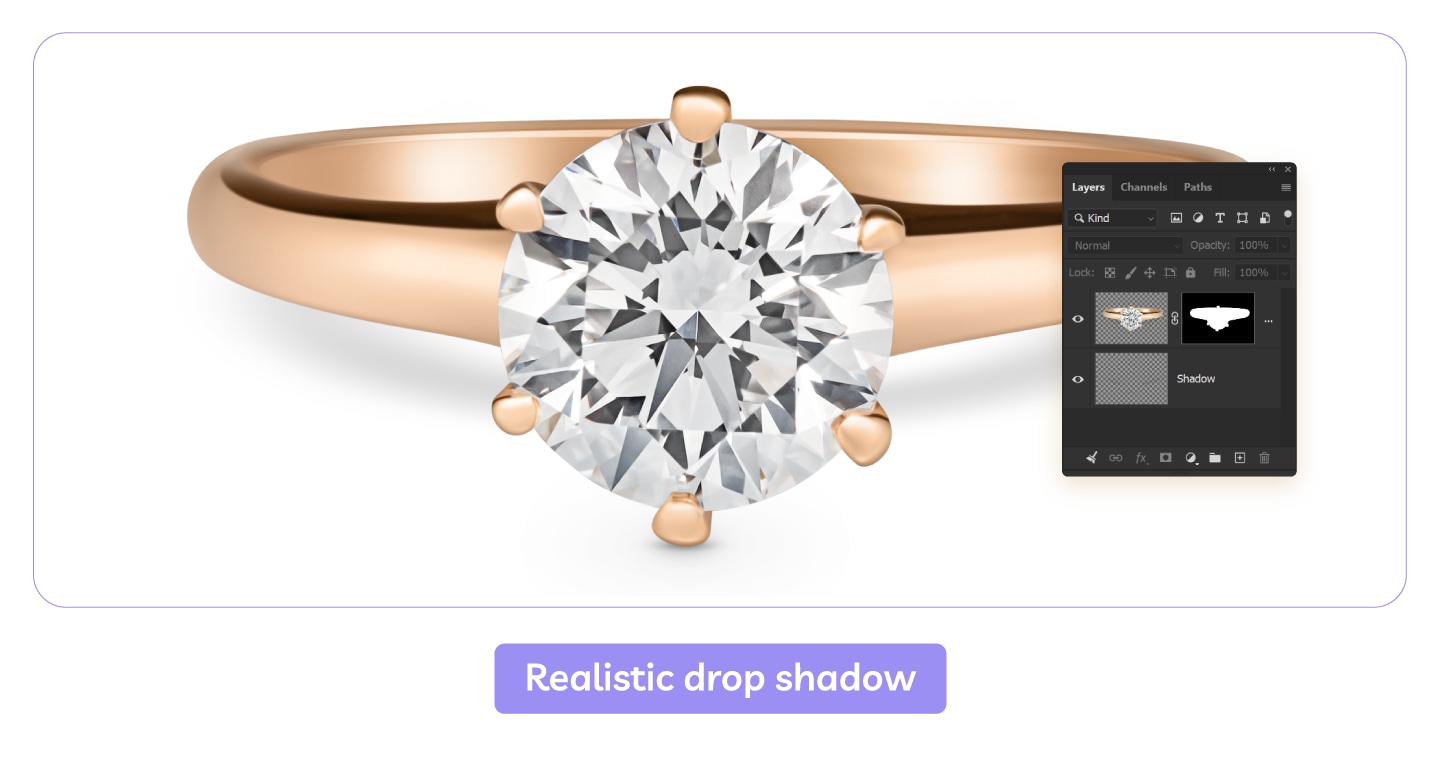
Professional shadow editing also gives brands greater creative control. Instead of relying on whatever lighting happened to be captured during a photoshoot, editors can create a consistent look across an entire catalogue. Whether products were photographed on different days, in different studios or by different photographers, every image can share the same clean, polished appearance.
For businesses managing hundreds or even thousands of product images, that consistency becomes part of the brand experience. Customers may never notice that every shadow falls in the same direction or has the same softness, but they do notice when a catalogue feels organised, professional and trustworthy.

Real-World Ecommerce Brands Using Drop Shadows
One of the easiest ways to understand effective drop shadow editing is to look at the brands that use it every day. Although each has its own visual identity, they all use subtle, consistent shadows to help products feel grounded and professionally presented.
Nike
Nike’s product photography is clean and product-focused. Trainers are typically displayed on bright backgrounds with soft shadows beneath the sole, helping each shoe feel grounded without distracting from the design.
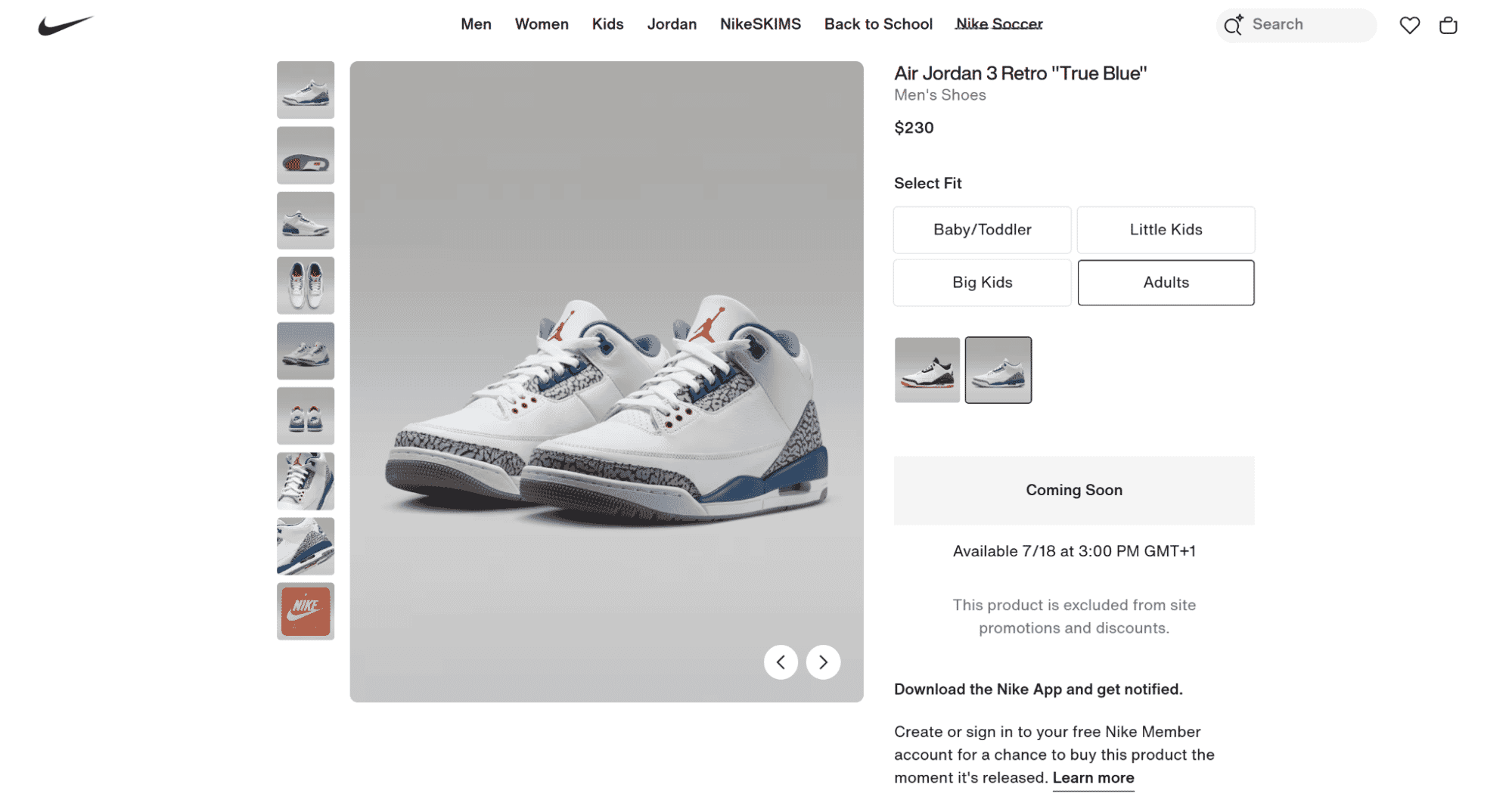
The shadows are understated, but they add just enough depth to define the shape of the product and prevent it from appearing to float on the page.
What works well
- Consistent shadow direction across the catalogue
- Soft, natural-looking edges
- Products remain the clear focal point
Sonos
Sonos uses subtle drop shadows to add depth to speakers and headphones photographed against white backgrounds.
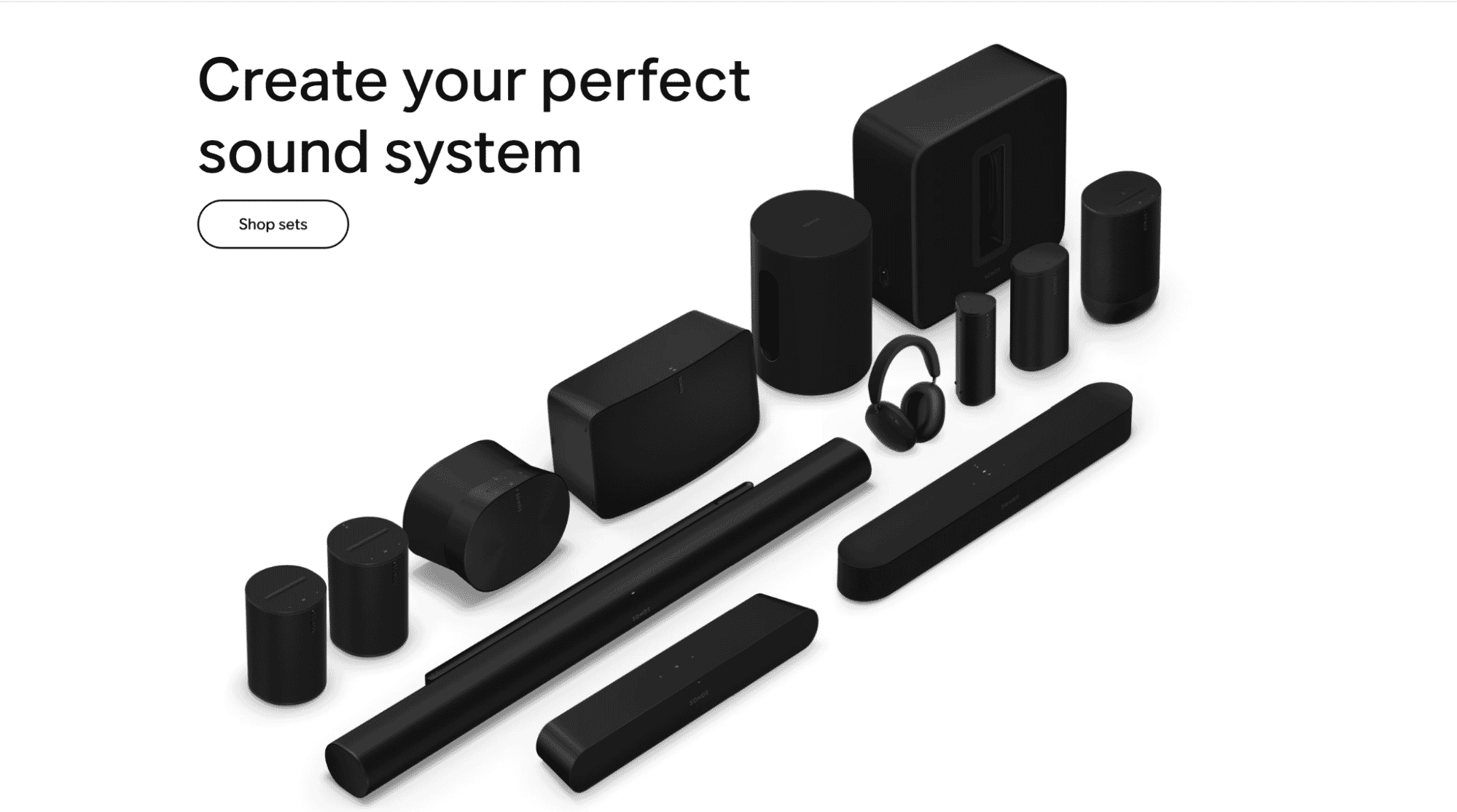
Rather than creating a dramatic effect, the shadows gently separate the products from the page, helping them feel more tangible while maintaining the brand’s minimalist aesthetic.
What works well
- Very soft shadows that complement the clean design
- Consistent presentation across different product ranges
- Adds dimension without clutter
Fenty Beauty
Fenty Beauty combines premium product photography with carefully controlled shadows that enhance the shape of bottles, compacts and tubes.

Despite the variety of packaging, the images maintain a consistent look throughout the catalogue. This creates a polished shopping experience where customers focus on the products rather than inconsistencies between images.
What works well
- Consistent lighting across different packaging styles
- Shadows enhance the product rather than dominate it
- Premium, editorial-style presentation
Bliss Skincare
Bliss Skincare uses clean white backgrounds supported by subtle shadows that help products feel naturally positioned on the page.
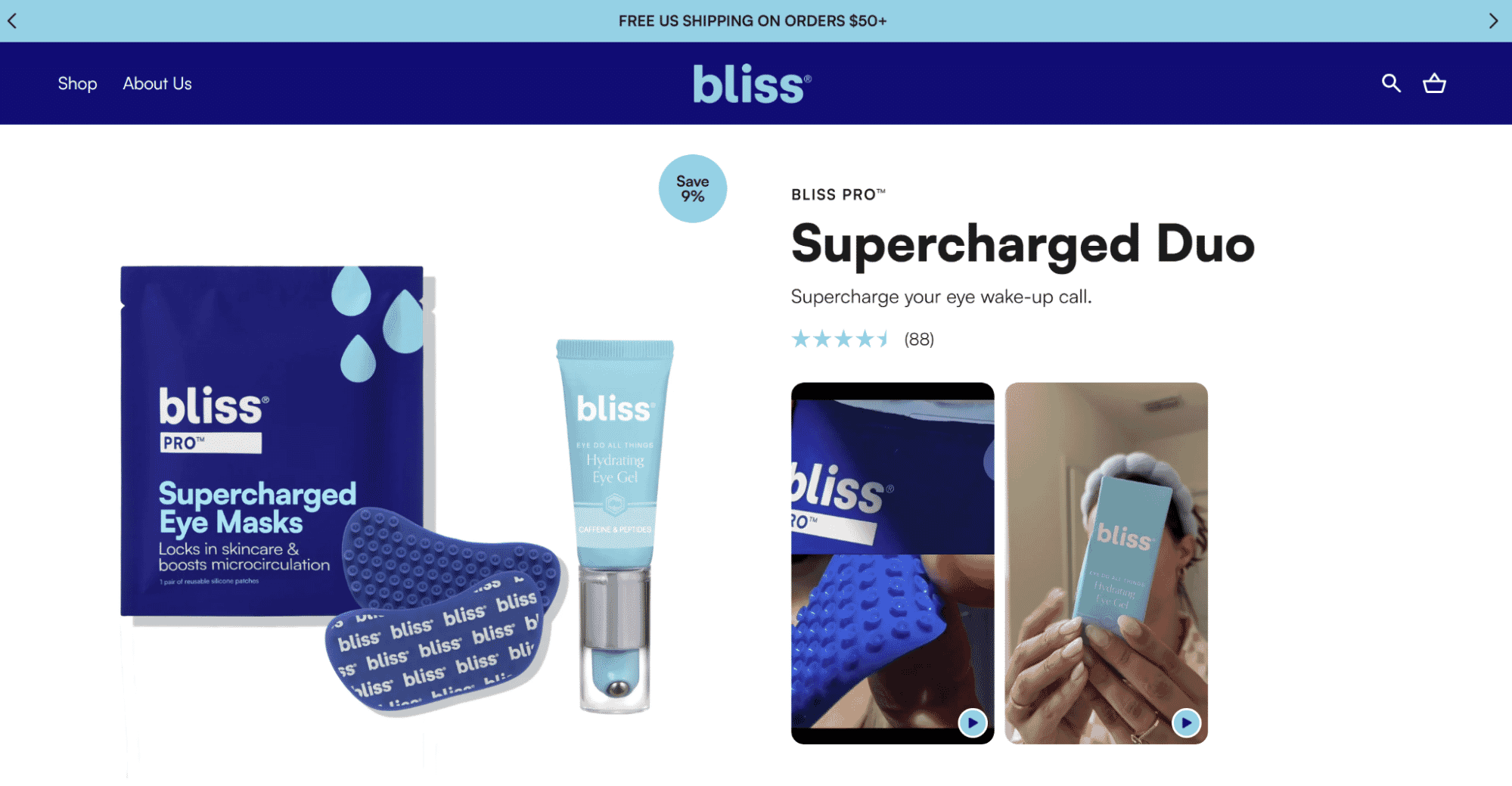
The consistent editing style allows bottles, tubes and jars of different sizes to sit comfortably alongside one another while maintaining a cohesive catalogue.
What works well
- Uniform product presentation
- Soft grounding shadows
- Easy product comparison across the range
What These Brands Have in Common
Although these brands operate in different industries, they all follow the same principles:
- Shadows are subtle rather than dramatic.
- Every product follows a consistent lighting style.
- Shadows support the product instead of competing with it.
- Images feel natural, polished and professionally finished.
The goal isn’t to make customers notice the shadow. It’s to create product photography that feels believable from the moment it appears on screen.
When Should You Use a Drop Shadow?
A drop shadow is one of the most effective ways to make product images feel natural and professionally finished. Its subtle effect works across almost every ecommerce category, from fashion accessories to consumer electronics.
If your products are displayed on a white or light-coloured background, a subtle drop shadow helps separate them from the background without compromising the clean, professional look shoppers expect from modern ecommerce websites.

Drop shadows are particularly effective for:
- Clothing and fashion accessories
- Electronics and technology products
- Homeware and kitchen accessories
- Toys and games
- Sports equipment
- Beauty and personal care products
- Office supplies
- Marketplace listings for Amazon, Shopify and WooCommerce stores
The shadow should always suit the product. A lightweight pair of sunglasses shouldn’t cast the same shadow as a heavy cast-iron casserole dish, just as a delicate perfume bottle requires a softer effect than a large piece of furniture.
Professional editors adjust factors such as opacity, blur, distance and direction to ensure every shadow feels believable. These subtle differences are what separate high-quality ecommerce photography from images that feel obviously edited.
Why Shadows Are Usually Added Last
Professional product editing follows a logical workflow, with each stage building on the previous one.
Professional ecommerce image editing follows a consistent workflow:
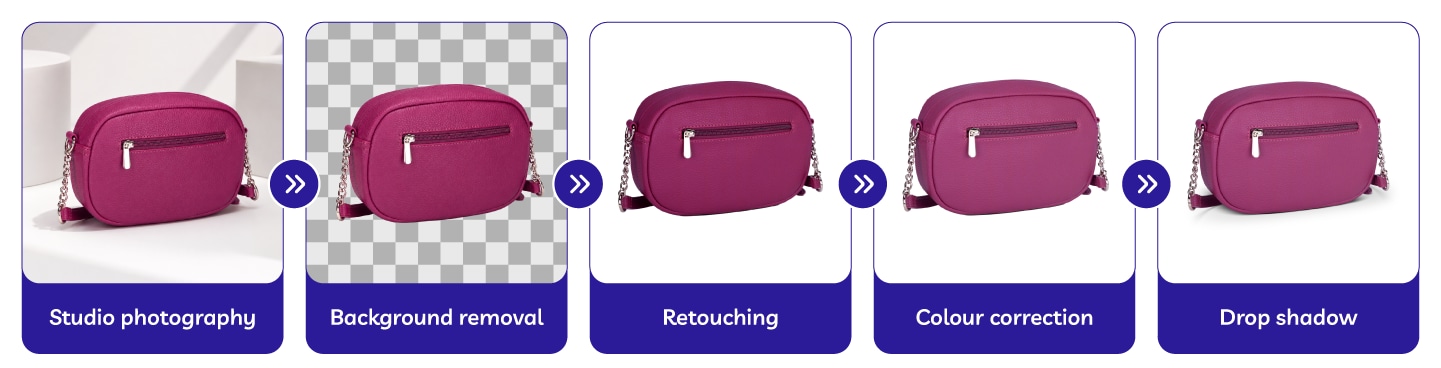
Adding the shadow at the end gives editors complete control over the final appearance. They can adjust the direction, softness and intensity of the shadow to suit the product while maintaining a consistent style across hundreds or even thousands of images.
This approach is one of the reasons large ecommerce brands are able to keep their product catalogues looking so polished, even when products have been photographed months apart or in different studios.
Wish you could just hand this over to a pro? Surprise, you can.

Frequently Asked Questions
What is a drop shadow in product photography?
A drop shadow is a realistic shadow added beneath or behind a product during the editing process. It recreates the way light naturally falls around an object, helping products look grounded and more realistic on a plain background.
Why are drop shadows used in ecommerce photography?
Drop shadows add depth and prevent products from appearing to float against a white background. They help create more natural-looking product images while maintaining a clean, consistent style across an ecommerce catalogue.
What’s the difference between a drop shadow and a natural shadow?
A natural shadow is captured during the original photoshoot and refined during editing, whereas a drop shadow is created digitally after the background has been removed. Both aim to produce a realistic result, but a drop shadow gives editors greater control and consistency.
Do all ecommerce product photos need a drop shadow?
Not always. While drop shadows work well for many products, some images benefit more from natural shadows or reflection shadows depending on the product, brand style and intended use. The goal is always to choose the shadow that creates the most realistic and consistent presentation.
Can you add a drop shadow after removing the background?
Yes. In fact, this is how most professional ecommerce workflows operate. Once the background has been removed and the image has been retouched, a realistic drop shadow is added as one of the final editing steps to complete the image.