Ghost mannequin photography has become a popular choice for fashion ecommerce because it gives clothing shape and structure without the distraction of a visible mannequin or model.
But that doesn’t mean it’s the right photography style for every garment, brand or product image.
The most effective ecommerce photography uses each technique with purpose. Ghost mannequin images are particularly useful when customers need to see the construction, fit and shape of a garment clearly, while live models, flat lays and lifestyle photography can be better suited to other situations.
So, when should you use ghost mannequin photography?
In this guide, we’ll look at the situations where ghost product photography works particularly well, when another approach might be more effective and how to decide what’s right for your ecommerce catalogue.
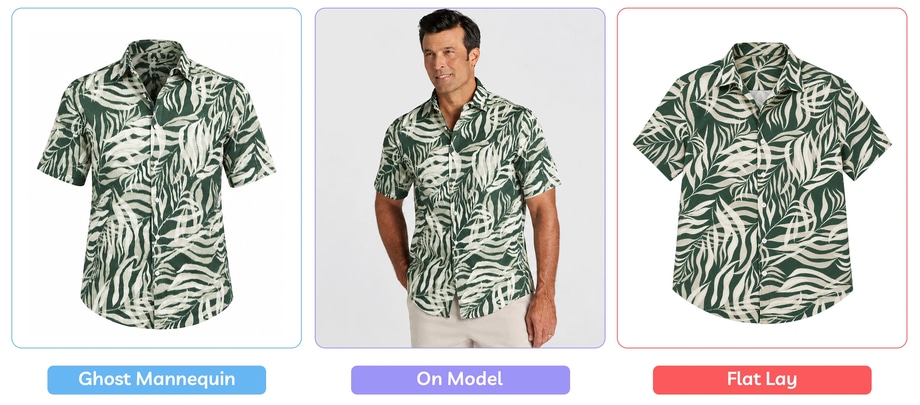
Use Ghost Mannequin Photography When the Garment’s Shape Matters
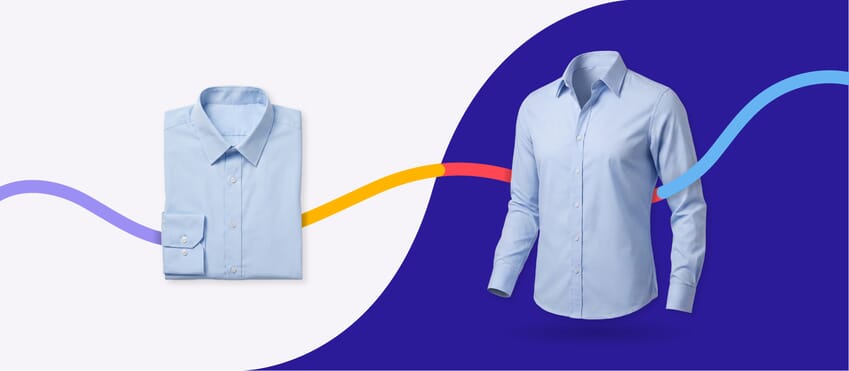
Some garments simply don’t photograph well when laid flat.
Shirts, jackets, dresses, hoodies and other structured clothing are designed to be worn in three dimensions. Photographing them on a mannequin helps preserve that shape, while removing the mannequin during editing keeps the customer’s attention entirely on the garment.
This allows shoppers to see details such as:
- Shoulder structure
- Necklines and collars
- Sleeve shape
- Waistlines
- Tailoring
- Overall silhouette
For products where shape and construction influence the buying decision, invisible mannequin photography can provide customers with much more useful visual information than a flat product image.
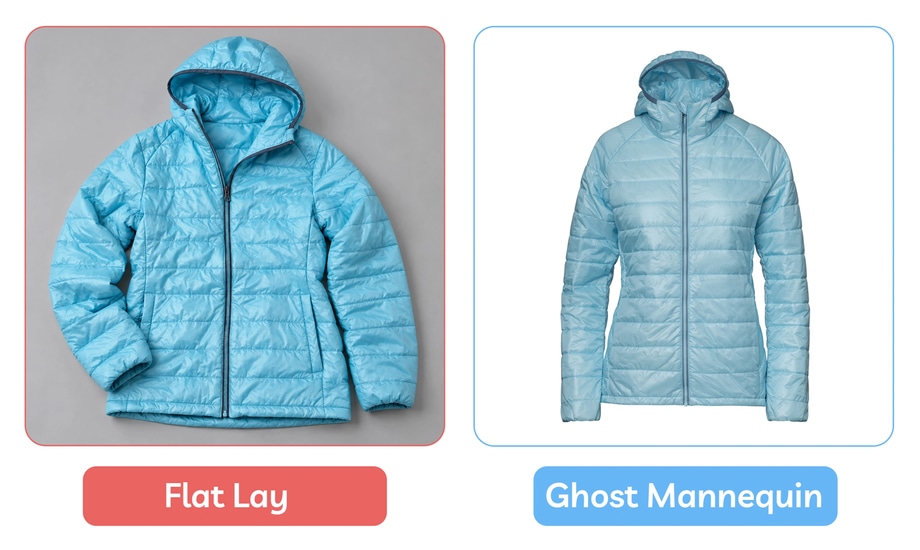
Use It When You Need a Consistent Ecommerce Catalogue
Ghost mannequin photography is particularly effective for retailers selling large numbers of clothing products.
Using the same mannequin, camera position, lighting setup and editing style creates a repeatable process that can be applied across an entire collection.
The result is a catalogue where products appear at a consistent scale and position, making category pages cleaner and helping customers compare garments more easily.
For fashion retailers regularly adding new SKUs, that consistency also makes ghost mannequin photography easier to scale as the catalogue grows.
Use It When You Want the Product to Be the Focus
Live model photography can be incredibly effective, but the model inevitably becomes part of the image.
For catalogue and product-page photography, that isn’t always what you want.
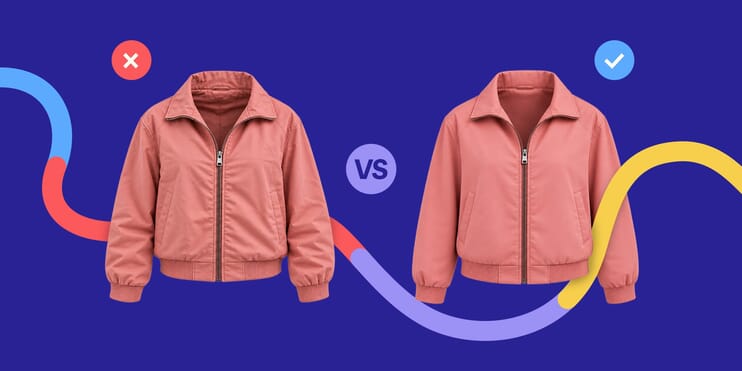
Ghost mannequin images remove the person while retaining the three-dimensional shape of the garment. Customers can concentrate on the colour, fabric, cut and construction without being influenced or distracted by the model, pose or styling.
This makes the technique particularly useful for primary ecommerce product images where the garment itself needs to do the talking.
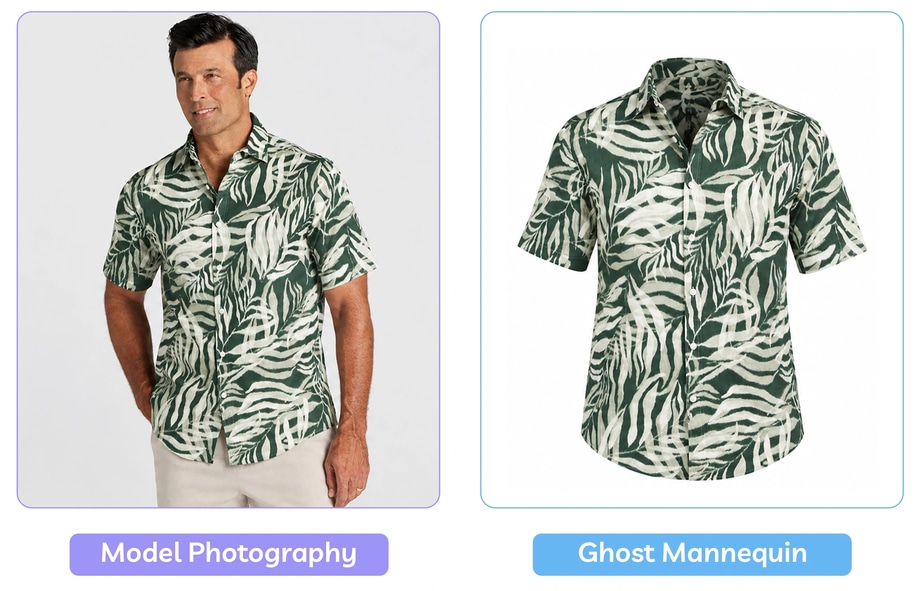
Use It When Photography Needs to Scale
Organising model shoots for every new product can become expensive and time-consuming as an ecommerce catalogue grows.
Live model shoots require models to be booked and coordinated alongside the wider production schedule, which can add complexity as new products and collections are launched.
A repeatable ghost mannequin setup can make high-volume apparel photography much easier to manage. Once the photography standards have been established, products can move through the same shoot and editing process consistently.
That makes it particularly useful for retailers managing frequent product launches, seasonal collections or large volumes of clothing ecommerce photography.
When Ghost Mannequin Photography May Not Be the Best Choice
There are also situations where another photography style makes more sense.
Live models are often better when fit, movement, styling or emotional connection are central to selling the garment.
Flat lay photography can work well for simple garments and accessories where three-dimensional structure is less important.
Lifestyle photography is usually stronger when the aim is to communicate a particular mood, environment or brand story.
The question isn’t whether ghost mannequin photography is better than these approaches. It’s which type of photography gives customers the information they need at that particular point in their shopping journey.
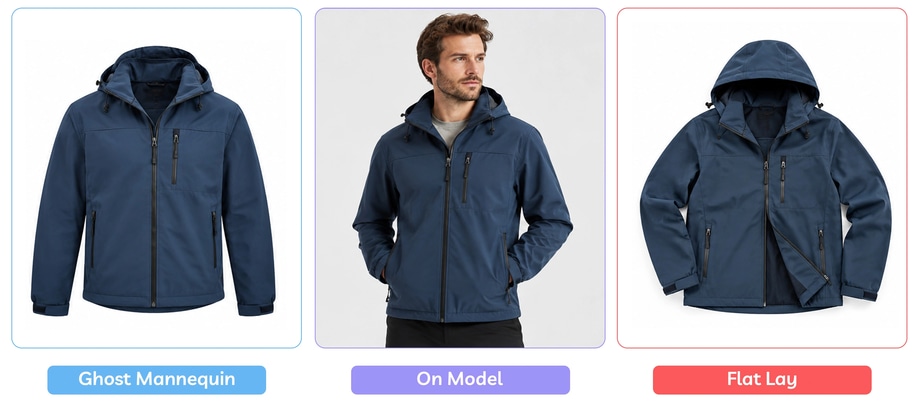
You Don’t Have to Choose Just One
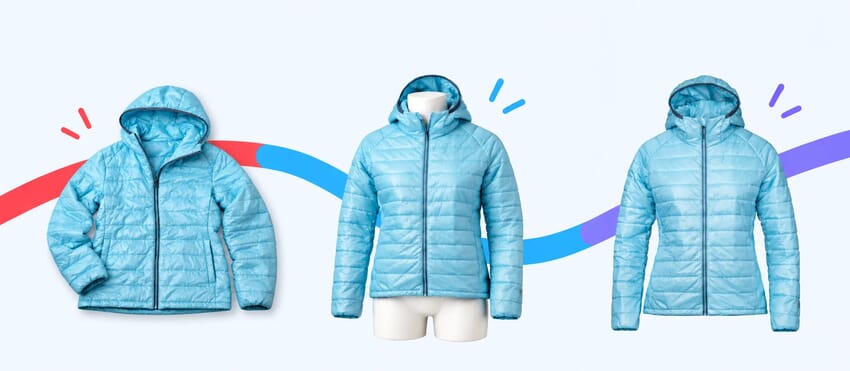
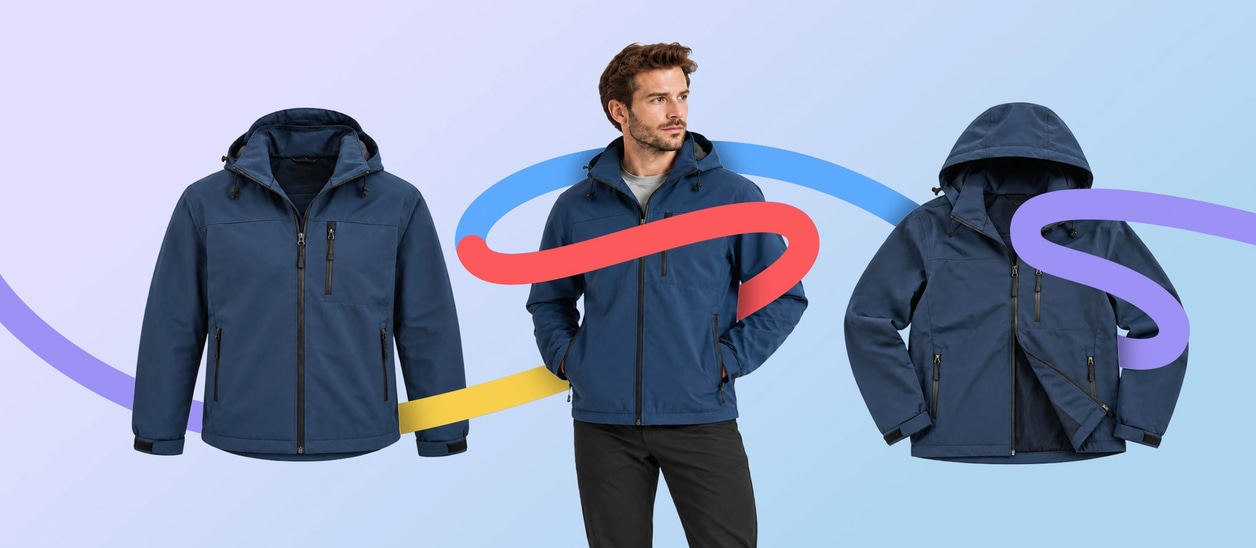
For many ecommerce brands, the strongest product pages combine several photography styles.
A ghost mannequin image can provide the clean, consistent primary product view. A live model can demonstrate fit and styling. Close-up images can reveal fabric and construction, while lifestyle photography can help customers imagine the product in context.
Each image has a different job.
Rather than asking whether you should use ghost mannequin photography across every image, consider where it adds the most value to the customer experience.
Is Ghost Mannequin Photography Right for Your Brand?
Ghost mannequin photography is an excellent choice when you need to showcase the shape and construction of clothing clearly, create consistency across a growing catalogue or keep the customer’s attention firmly on the product.
It works particularly well for structured apparel and high-volume ecommerce, where repeatability and visual consistency are important.
But it doesn’t need to replace every other form of clothing ecommerce photography. For many fashion brands, the strongest approach is a combination: ghost mannequin images for clear, consistent product presentation and model or lifestyle photography for fit, movement and storytelling.
Ultimately, the right photography mix is the one that gives customers the clearest and most complete understanding of what they’re buying.